Settings
The Settings module consists of these main sections to help you manage your organization:
- Company - Manage your organization's profile and configuration
- Users - Control team member access and invitations
- Permissions - Define roles and access control
- Post Orders - Post invoices for the orders to SQL Account
- Customize Template - Customize Picking List Template
Company
Check out our Setup Guide for detailed instructions on creating your company profile.
View and update your company information, including business details and API configurations.
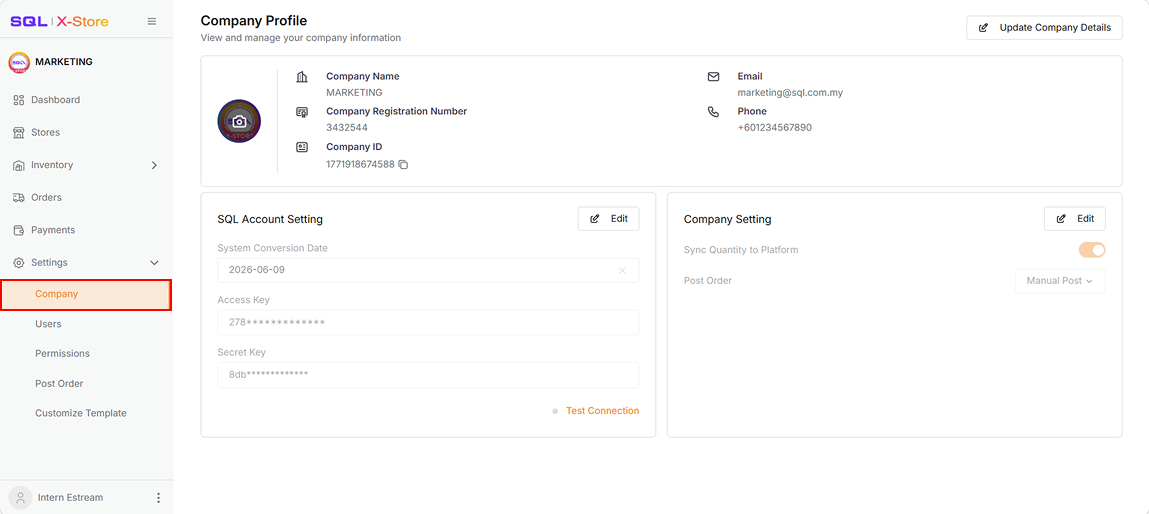
Company Profile
Your company profile displays:
- Company ID
- Company name
- Logo
- Registration number
- Email address
- Phone number

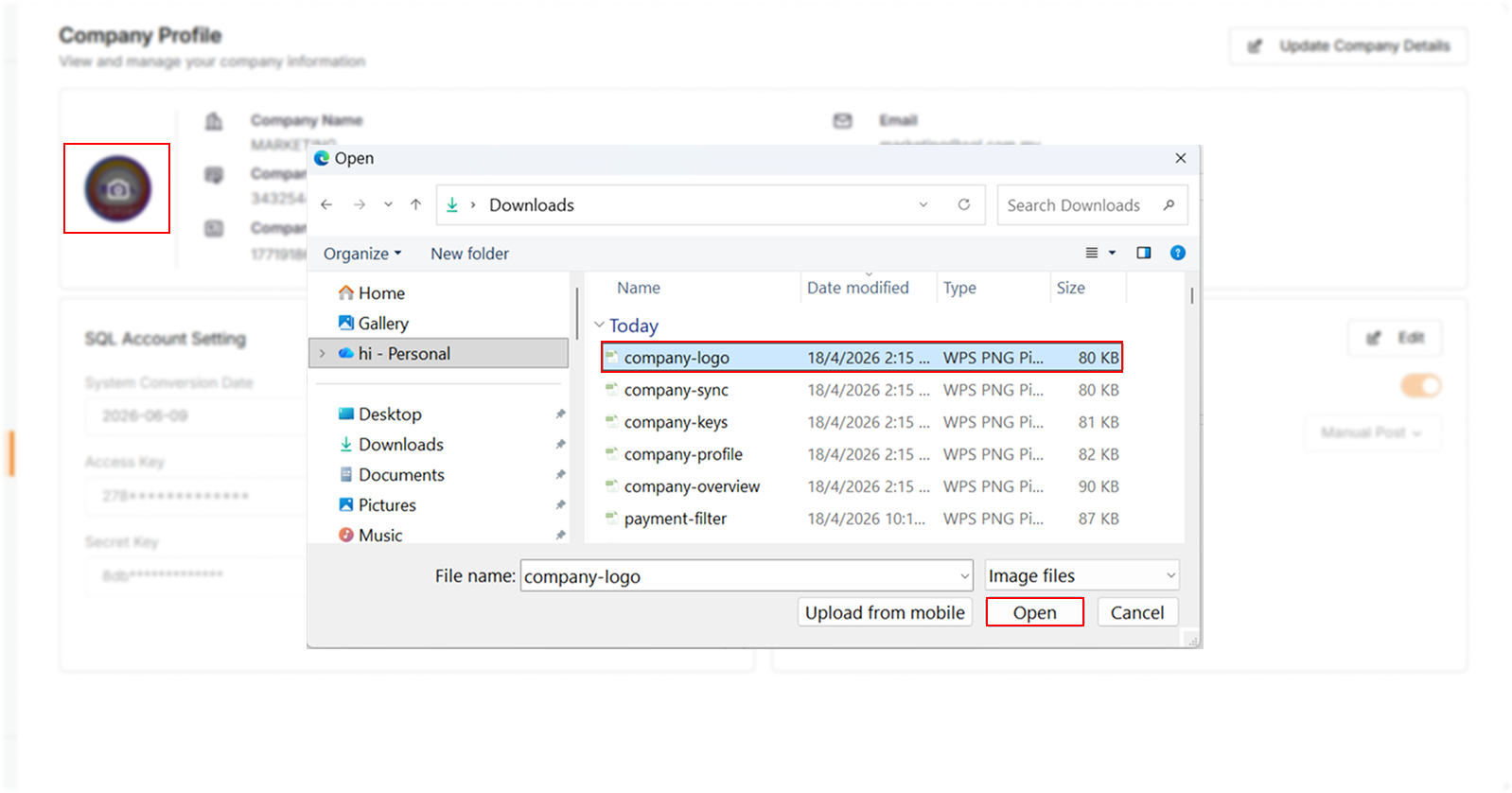
Update Company Logo
Click on your current logo to upload a new one.
SQL Account Integration
For more details on SQL Account configuration, see our Setup Guide.
You may add your SQL Account configuration here:
- System Conversion Date
- SQL Account Access Key and Secret Key
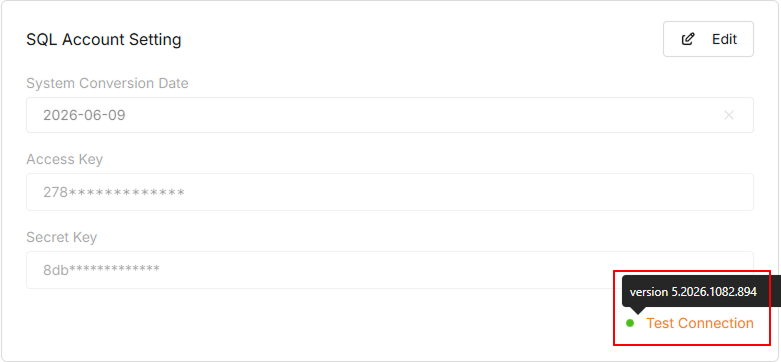
You can click Test Connection to verify the connection with the SQL Account API service. A green dot indicates a successful connection, and clicking it will display the SQL Account API version. A red dot indicates a connection error, and clicking it will display the error message.
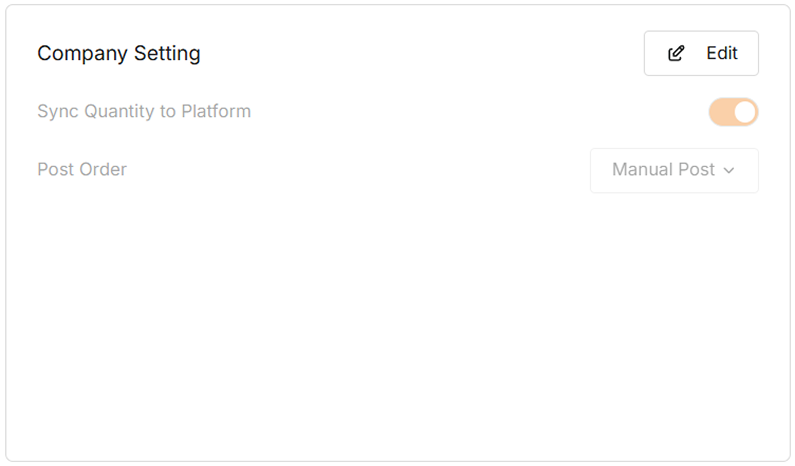
Company Setting
Enable specific company features such as enabling Auto Synchronize Quantity to Platform and update your desired default Post Order Option whether to Manual Post or Post All.
Editing Company Details
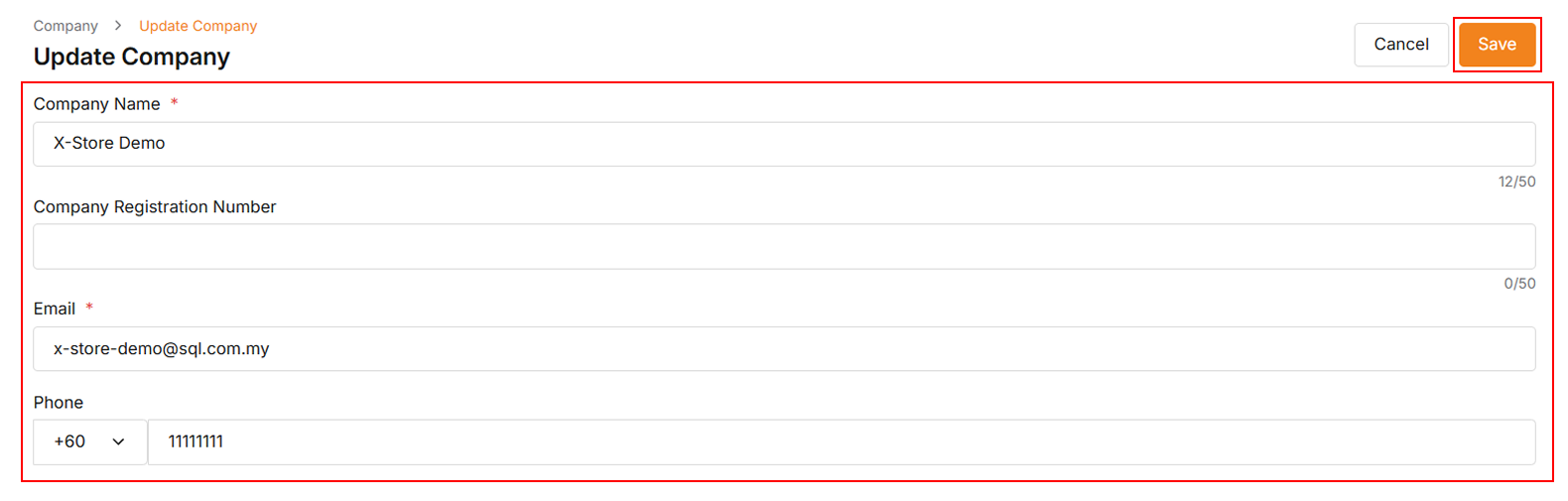
To update your company information:
-
Click the Update Company Details button

-
Modify any of the following fields:
- Company name
- Registration number
- Email address
- Phone number
-
Click Save to apply changes
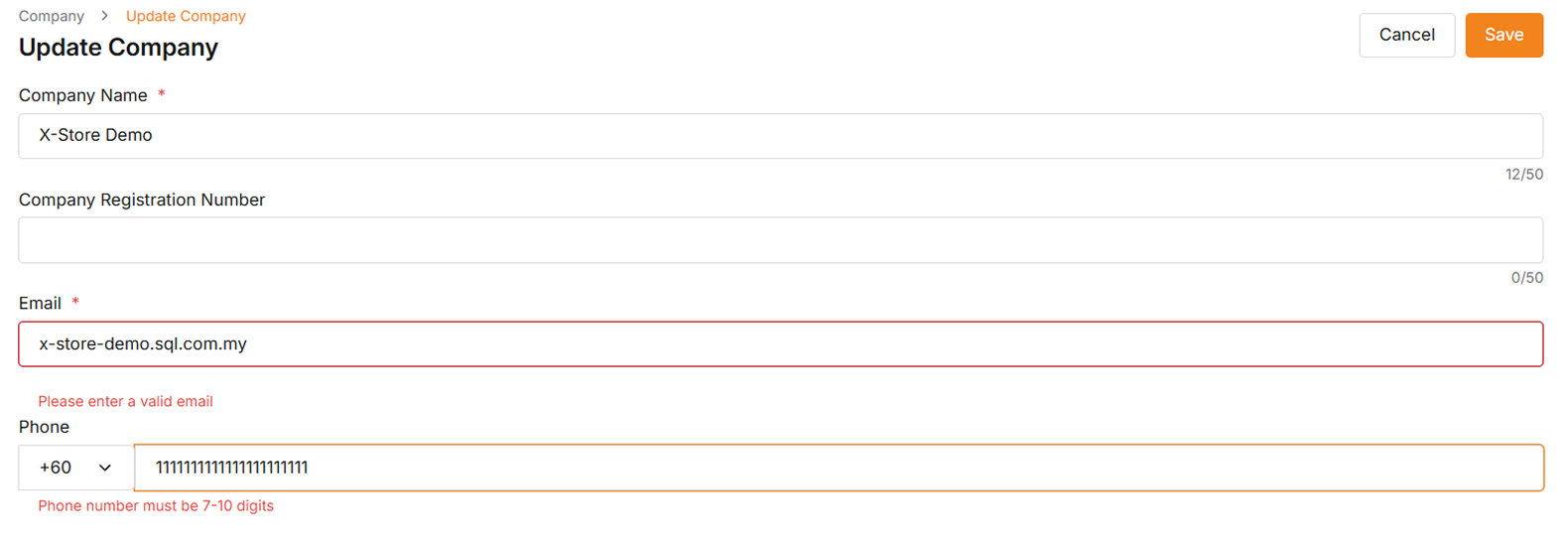
You must provide a valid email address and phone number. Invalid entries will trigger a warning message.
Canceling Changes
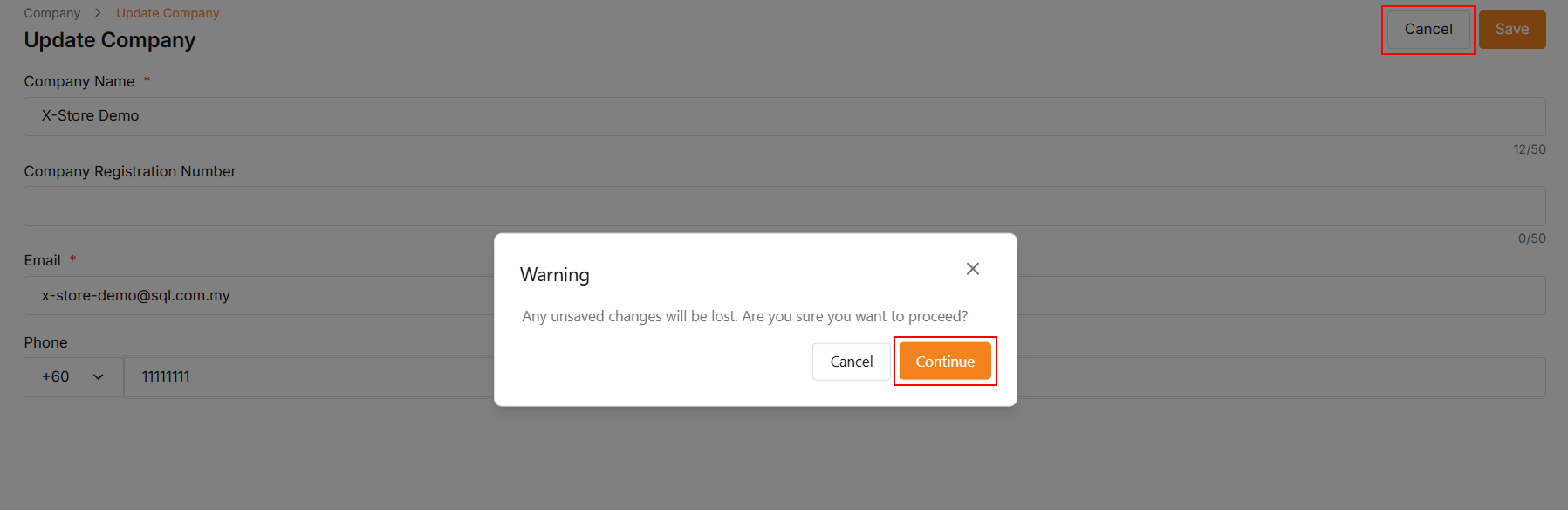
If you click Cancel after making edits, you'll see a confirmation dialog. Click Continue to discard your changes.
Users
Manage your team members, including viewing, editing, inviting, and removing users.
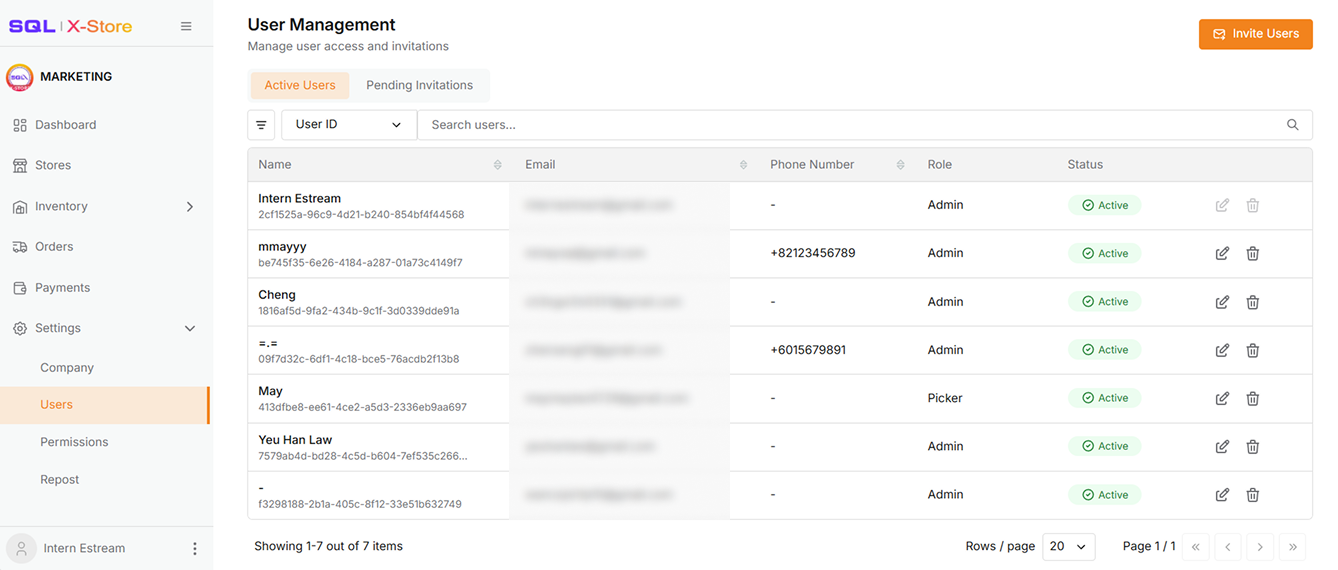
Active Users Table
The users table displays all team members with their name, ID (with copy function), email, phone number, assigned role, status, and actions. Use the search bar to filter users by name, ID, email, or phone number. Your account always appears in the first row.
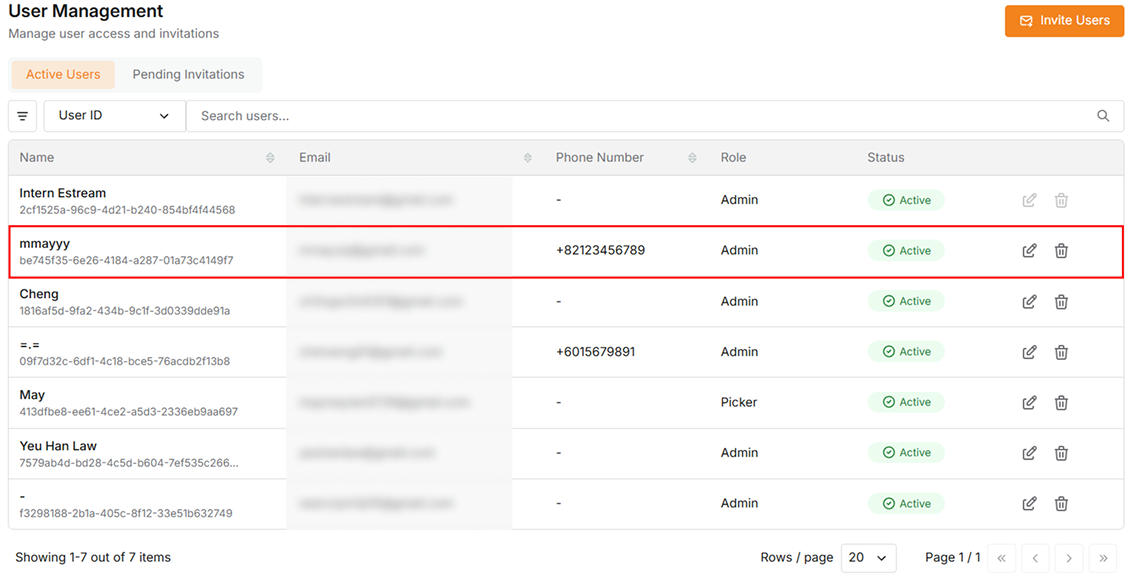
| Column | Description |
|---|---|
| User Name & ID | Full name with copyable ID |
| Contact email address | |
| Phone Number | Contact phone number |
| Role | User role in company |
| Status | User status in company |
| Actions | Edit and Remove user |
Editing User Details
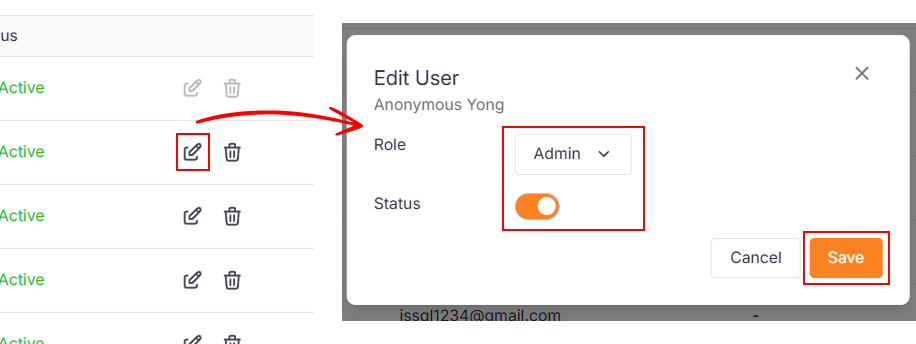
You can modify a user's role and status directly in the table.
- Click the Edit icon in the user's row
- Update the desired fields.
- Click the Save button.
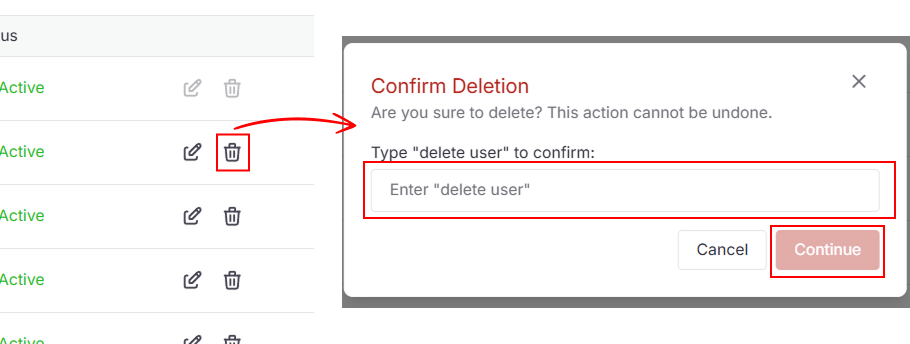
Removing Users
- Click the Delete icon in the user's row
- Type
delete userin the confirmation dialog - Click Continue to remove the user
Inviting New Users
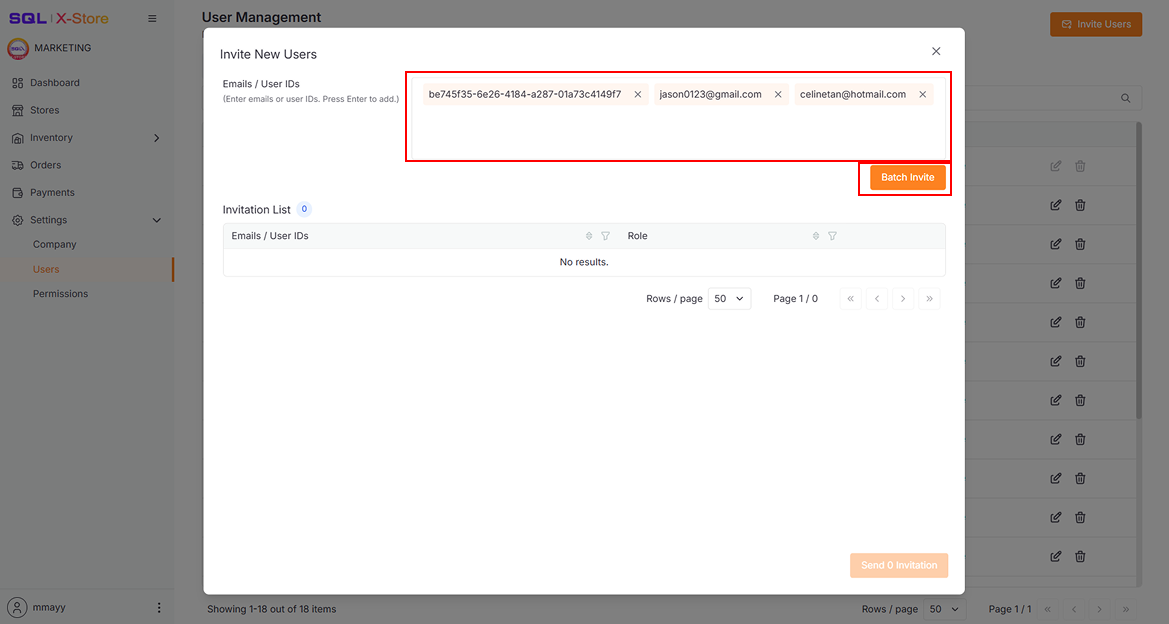
Step 1: Enter User Details
- Click the Invite Users button
- In the dialog, enter either:
- Email address (press Enter after each email)
- User ID
- Click Batch Invite to add users to the invitation list
User IDs appear in the users table. Ask the person you want to invite to copy their ID and send it to you.
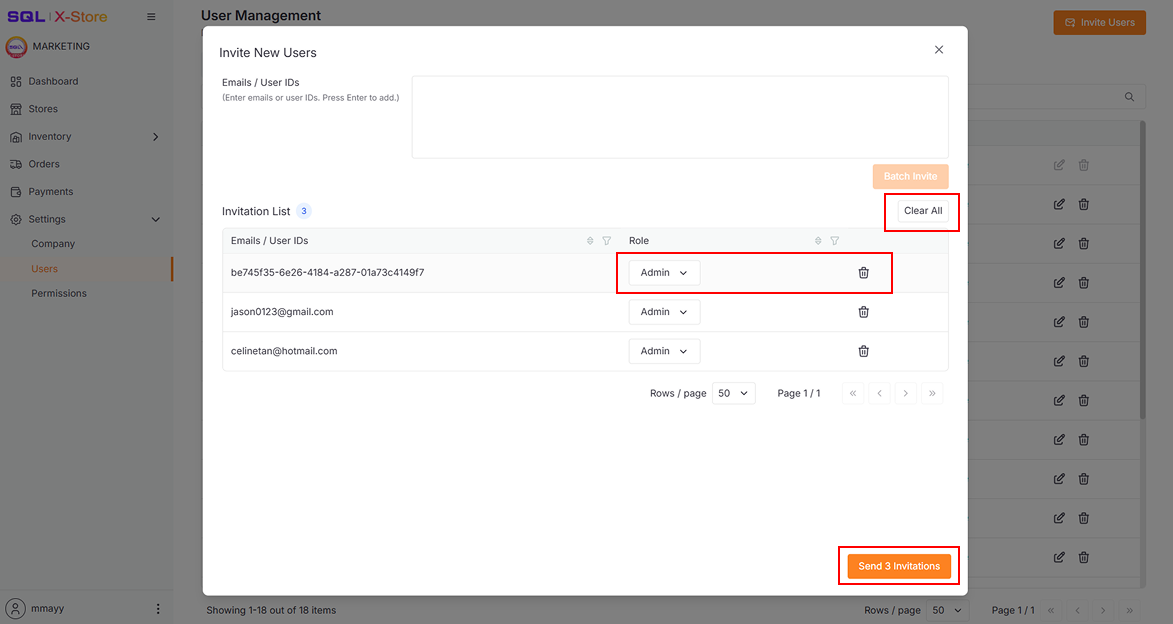
Step 2: Assign Roles and Send
- Select a role from the Role dropdown for each user
- Click Send Invitation to send all invitations
- Use Clear All to remove all pending invitations from the list
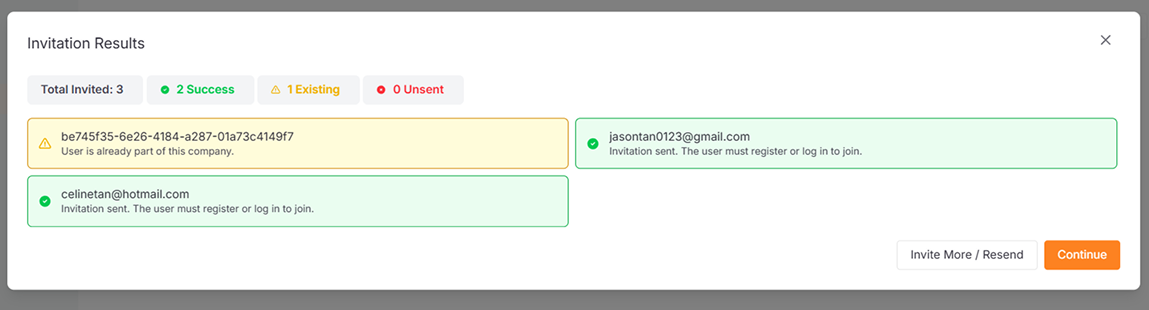
Step 3: Review Invitation Status
After sending, you'll see a status summary showing:
| Status | Meaning |
|---|---|
| ✅ Success | Invitation sent successfully |
| ℹ️ Exist | User already joined the company |
| ❌ Failed | Invitation could not be sent |
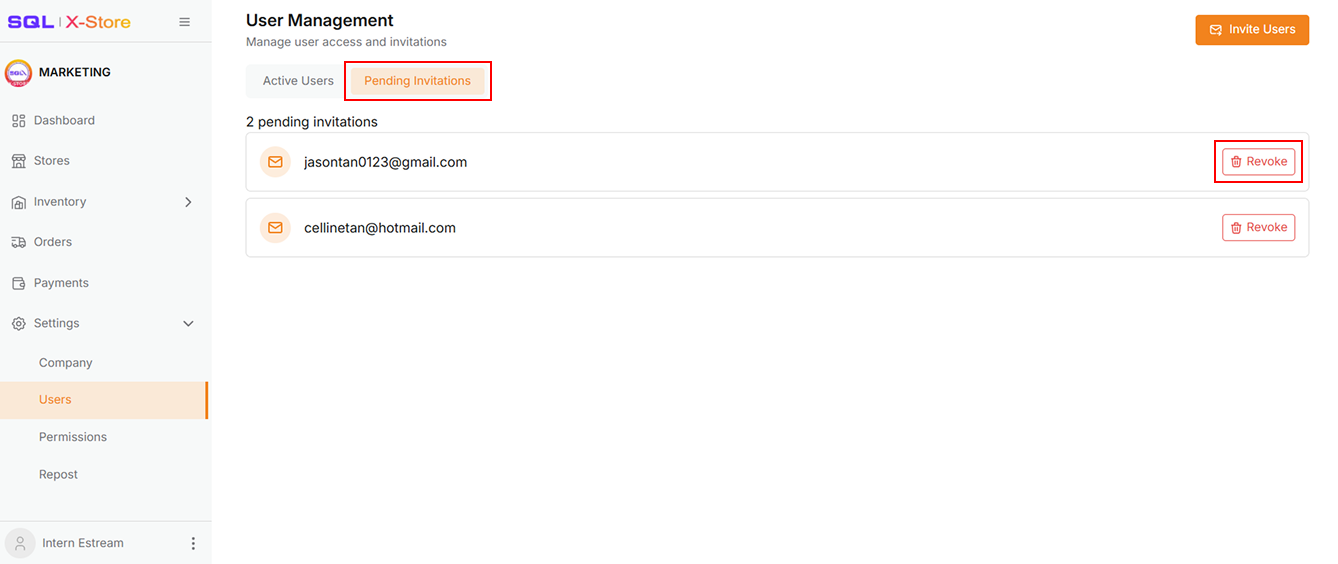
Managing Pending Invitations
Click Pending Invitations to switch to the pending list view.
- Shows invitations not yet accepted
- Includes a Revoke button for each invitation
- Invitations expire after 24 hours
- Expired invitations must be resent
Accepting Invitations
Recipients receive an email with an invitation link.
Users invited by User ID join the company immediately without needing to accept an invitation.
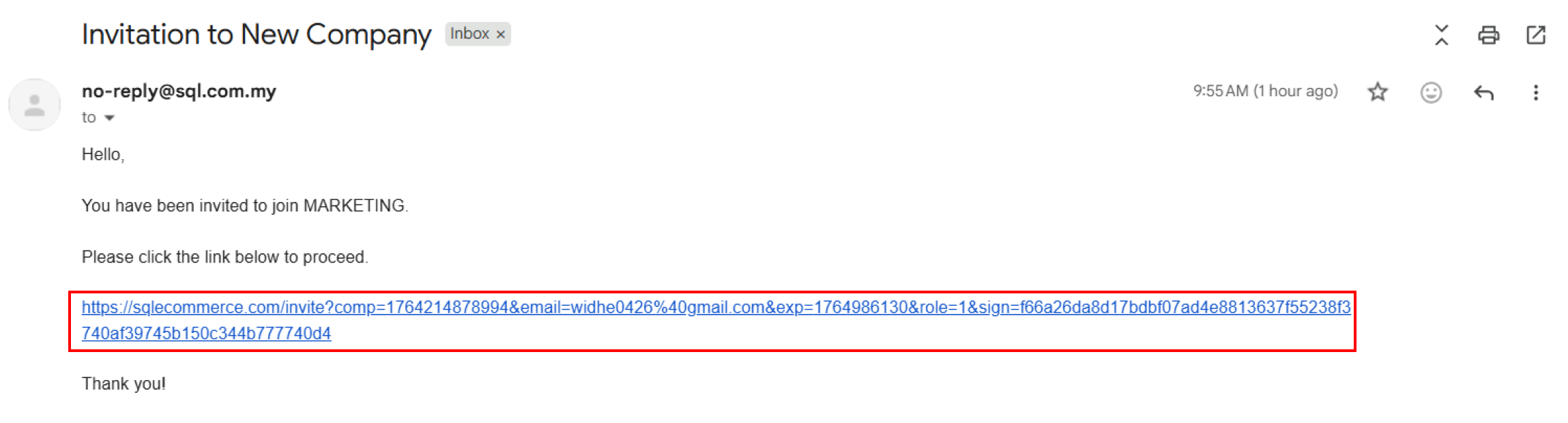
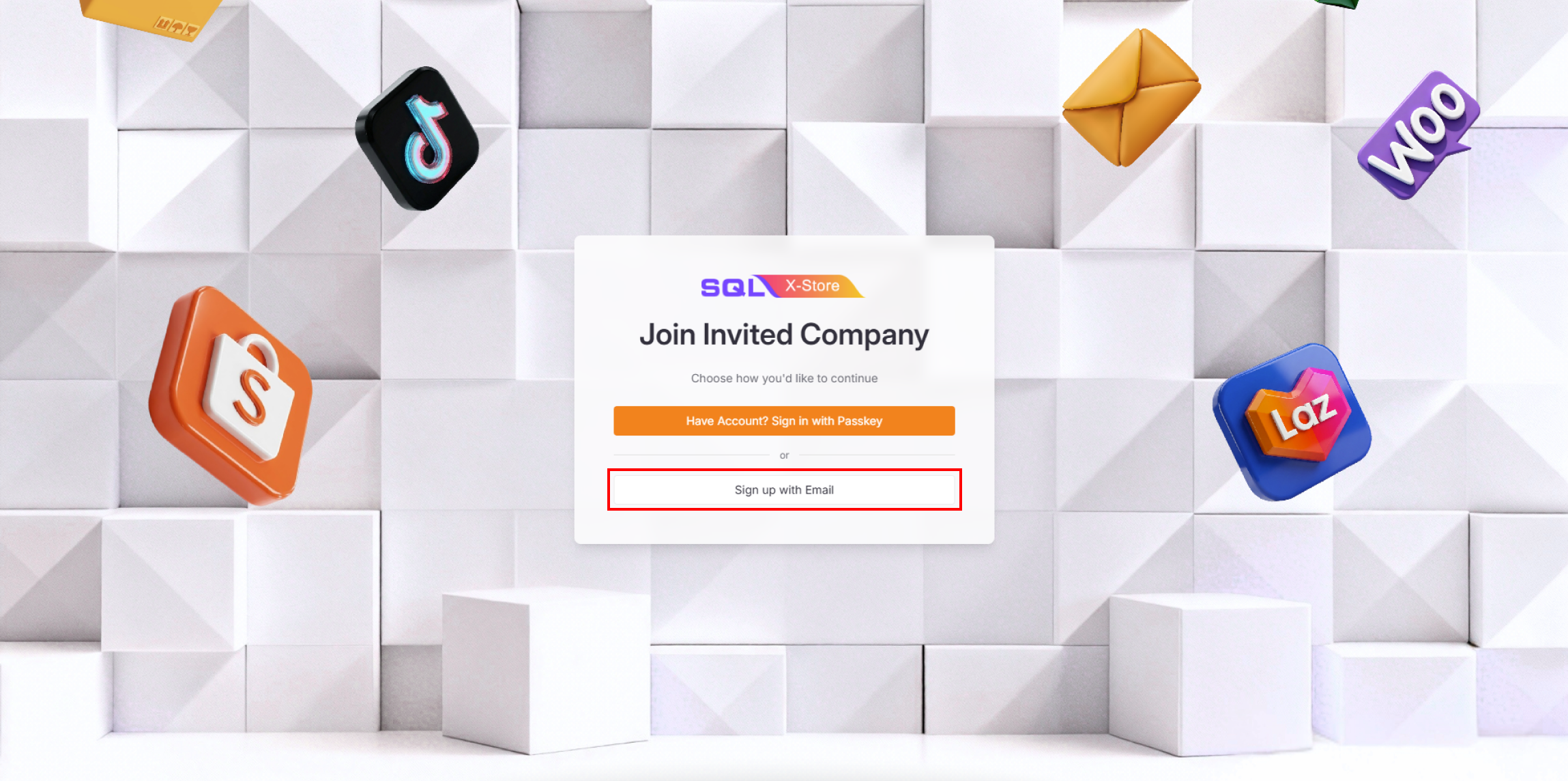
Option 1: Sign in with Passkey
Log in using a Passkey and redirect to the Company List page.
You must register a user account with a passkey before using this method to accept the invitation.

Option 2: Sign up with Email
Register a new account, log in automatically, and redirect to the Company List page.
Permissions
Currently, adding, editing, and deleting roles are not available.
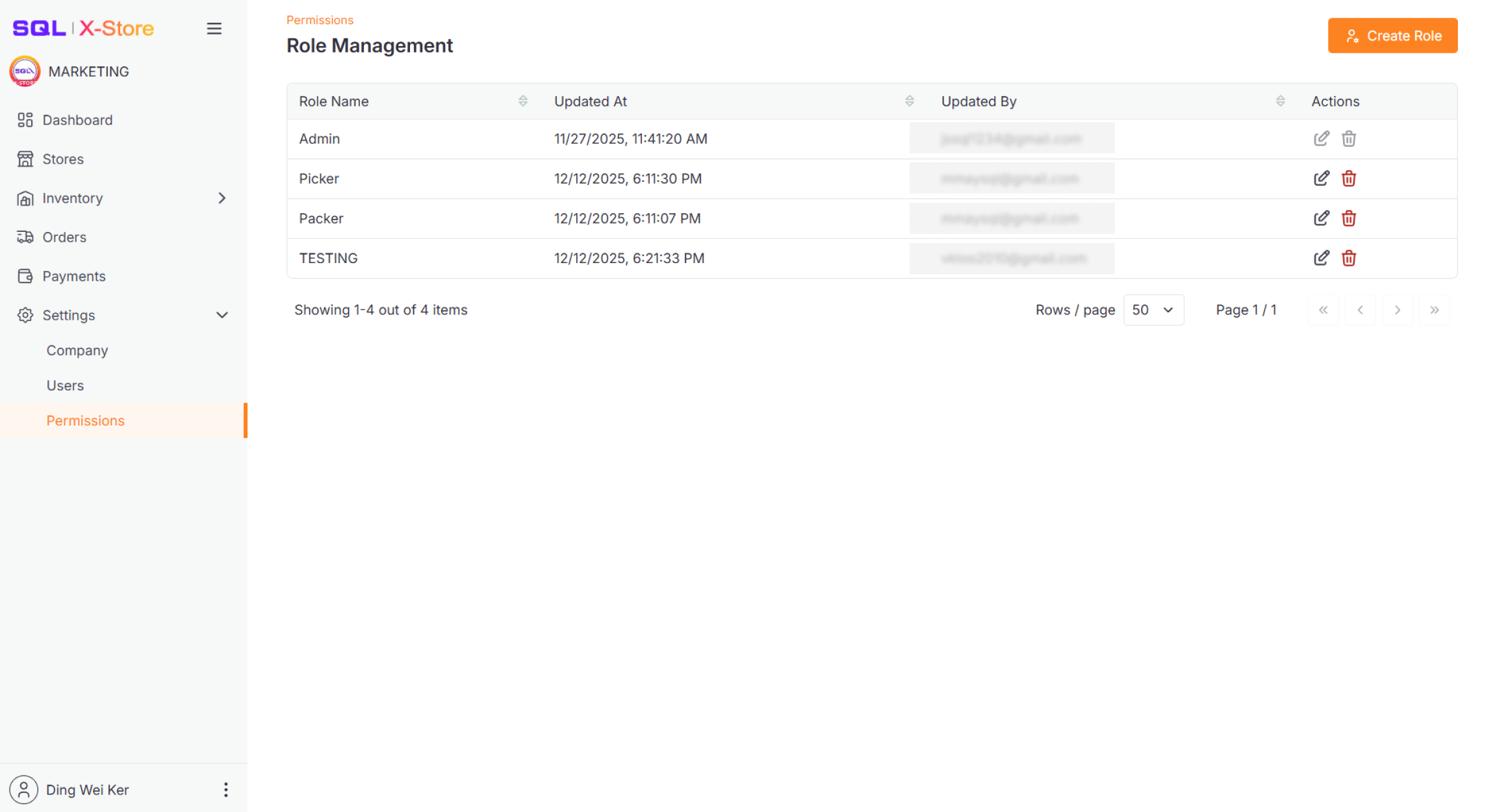
Define and manage roles with specific permissions to control what users can do in the system.
The roles table displays:
- Role name
- Last updated date
- Updated by (user name)
- Action buttons (Edit, Delete)
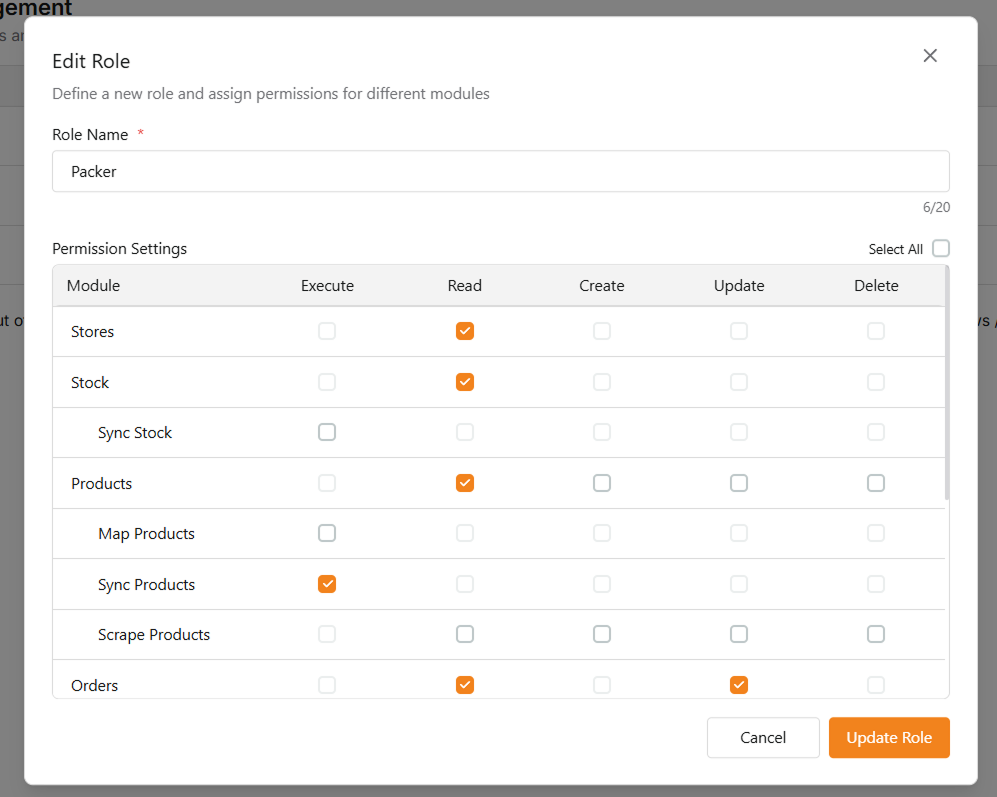
Editing Roles
- Click the Edit icon in the role's row
- Update the role name or adjust permissions
- Click Update Role
- Confirm your changes by clicking Continue
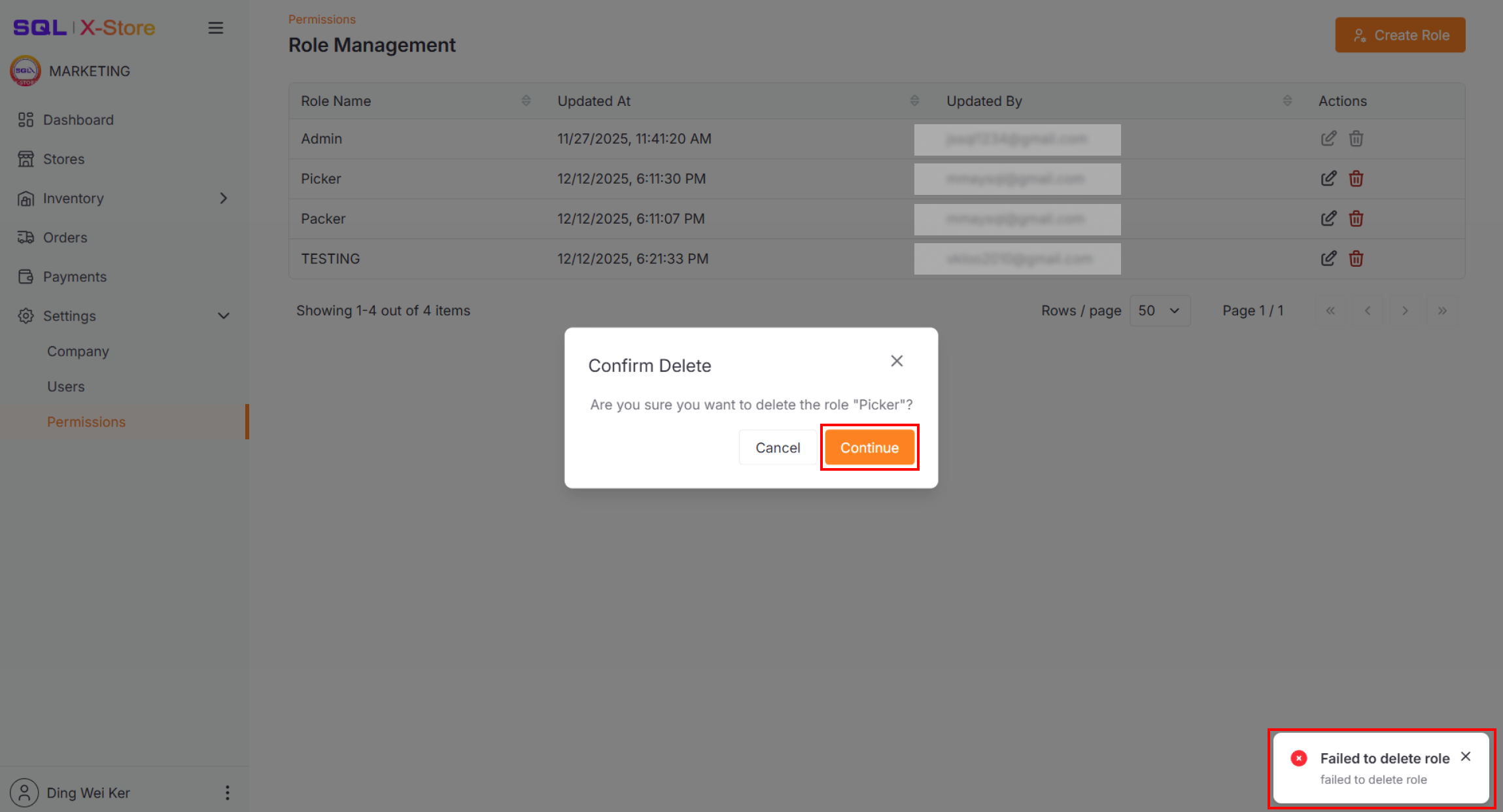
Deleting Roles
- Click the Delete icon
- Confirm the deletion in the dialog
Roles can only be deleted if they're not assigned to any users. If the role is in use, you'll see a warning message.
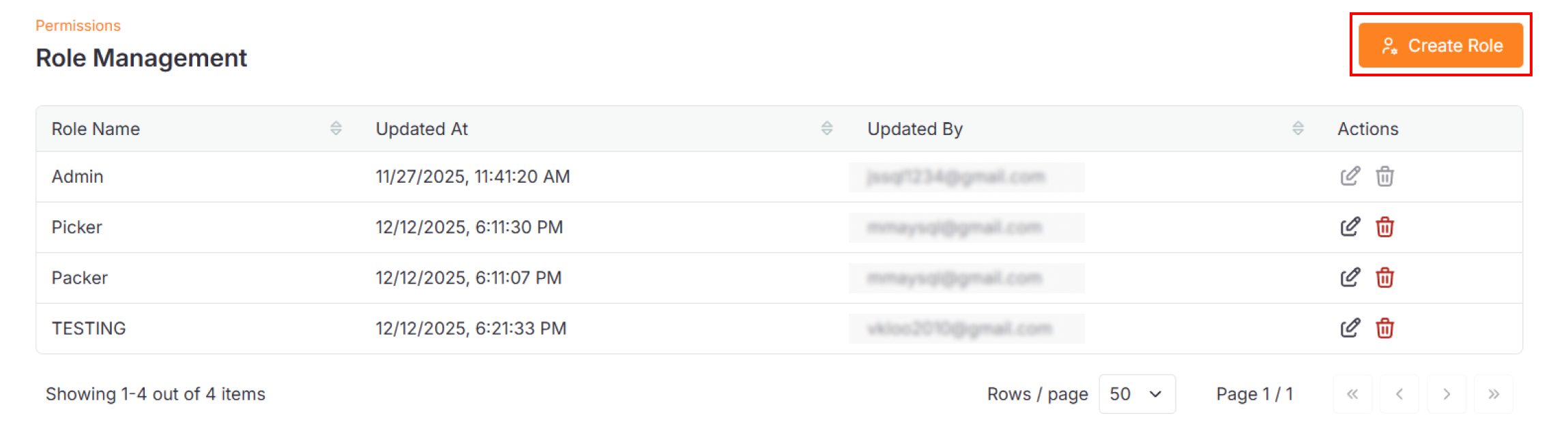
Creating New Roles
-
Click Create Role at the top right of the table
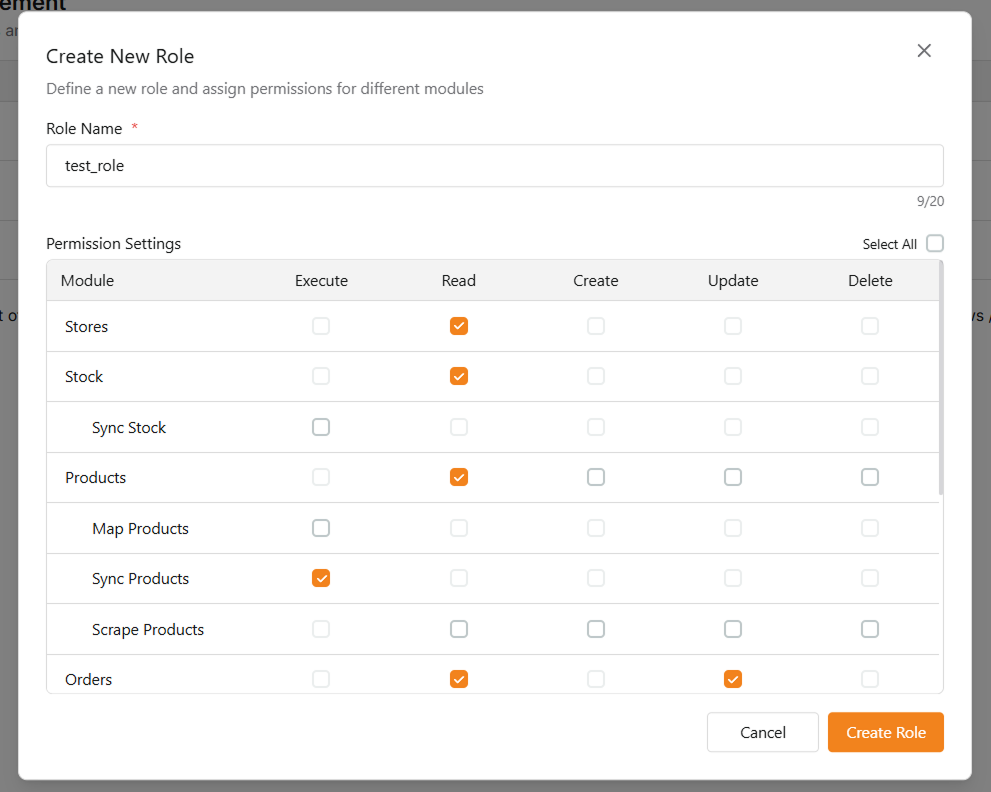
-
In the dialog:
- Enter a role name
- Select the permissions to assign
-
Click Create Role
-
Confirm by clicking Continue
Post Order
View orders in the Shipped, Delivered, or Completed state and post their invoices to SQL Account. This section has two tabs:
- Unposted Tab: Orders that haven't been posted yet, or orders that were updated after their last posting date (i.e., the order's updated date is later than its posted date).
- Posted Tab: Orders that have already been posted and have no changes since.
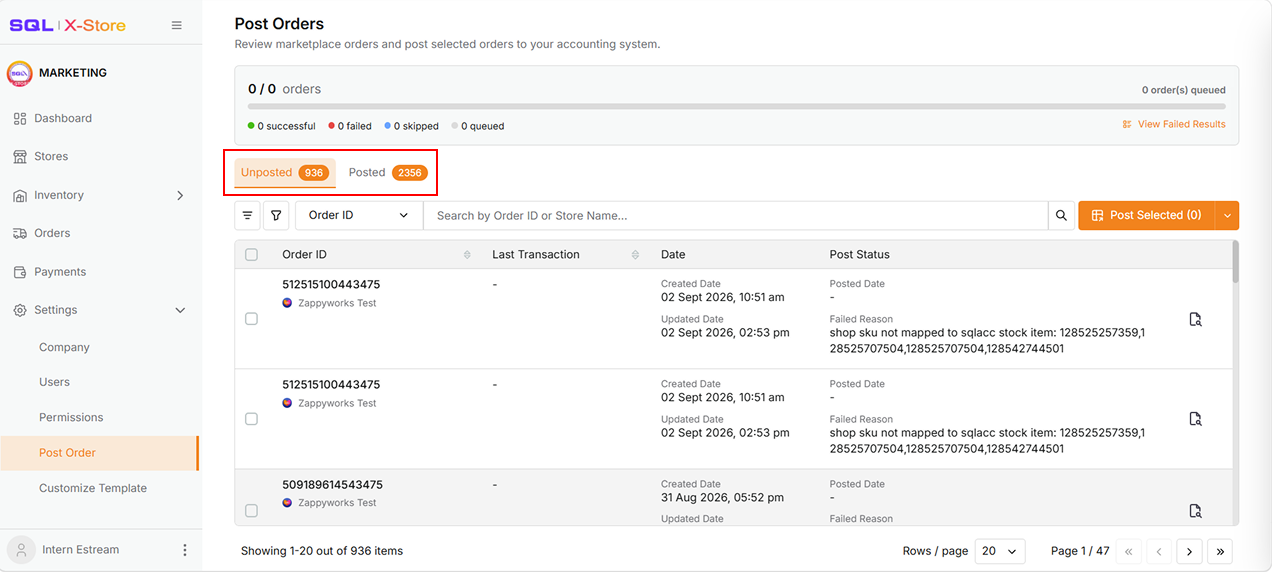
You can change the View Options to see more order details, or use the filter options to narrow down which orders are displayed. By default, orders are filtered to those created within the last 30 days. You can include older orders by adjusting the filter options.
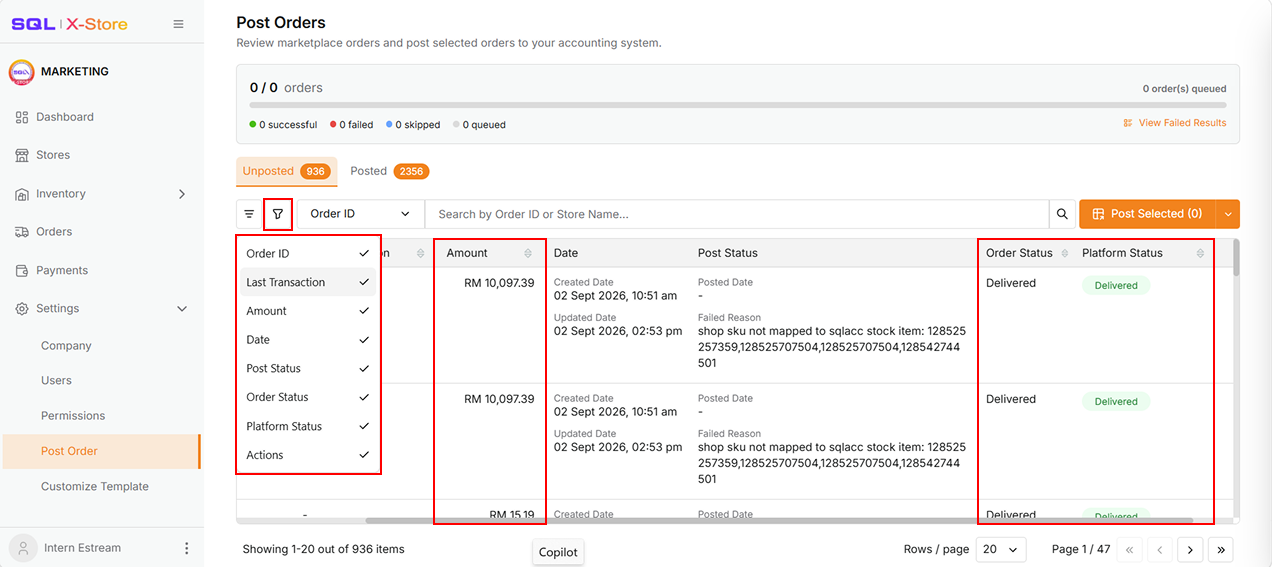
Posting
-
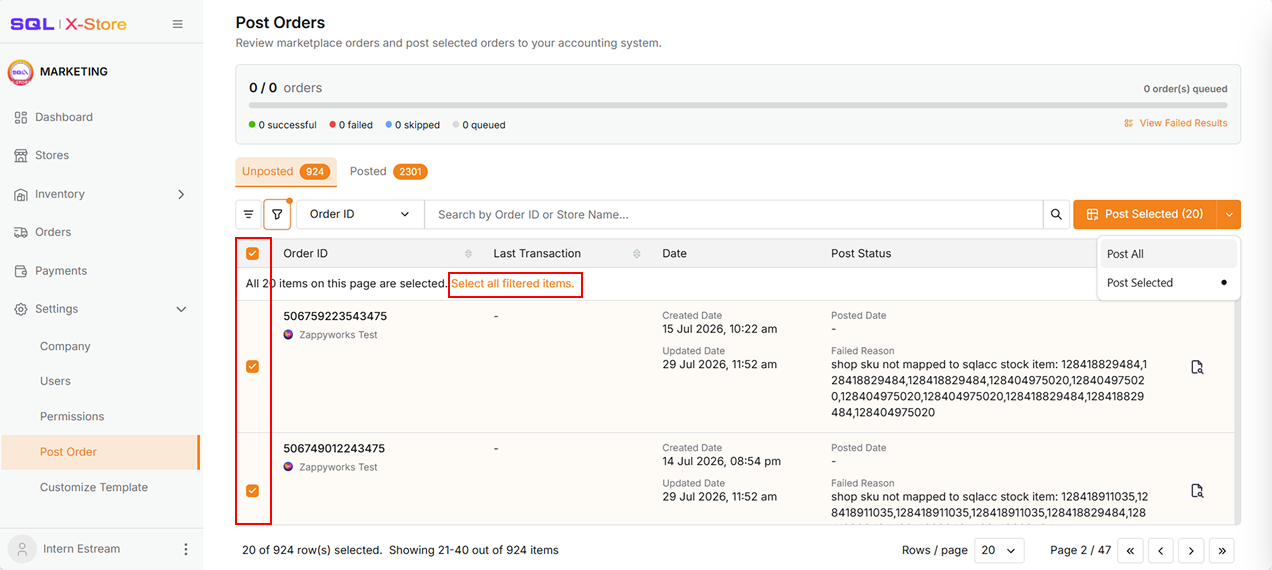
Select the orders you want to post, then click Post Selected. To select every order that matches your current filters, click Select all filtered items.
-
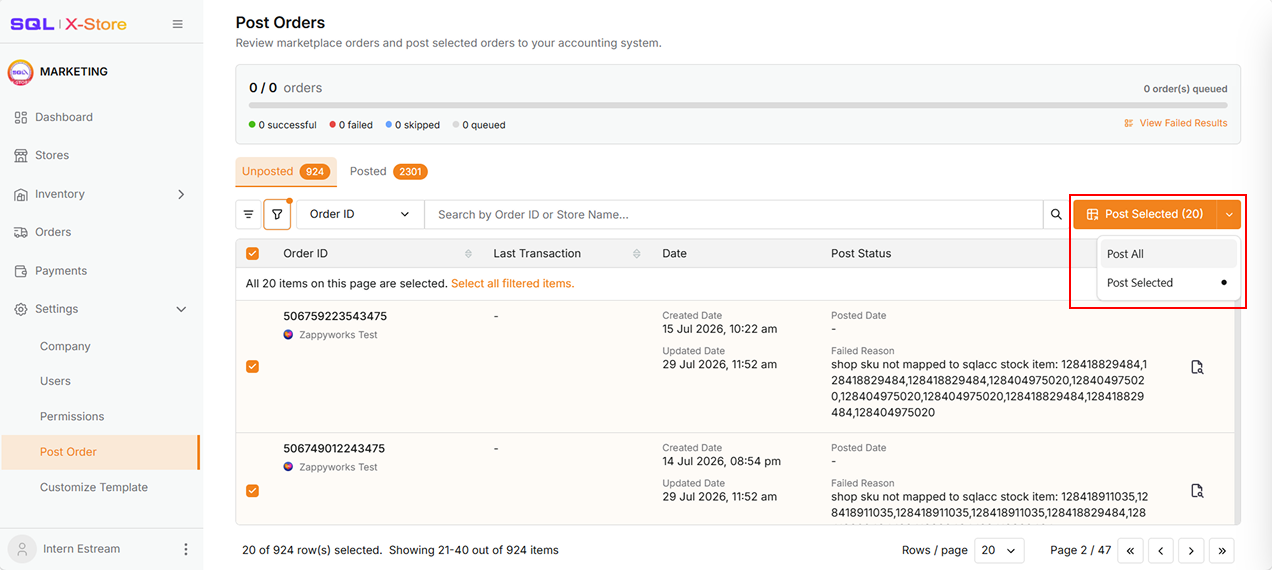
To post all orders matching your current filters in the Unposted Tab at once, click the dropdown next to Post Selected and choose Post All. You can also set your preferred posting option in advance under Company Setting.
-
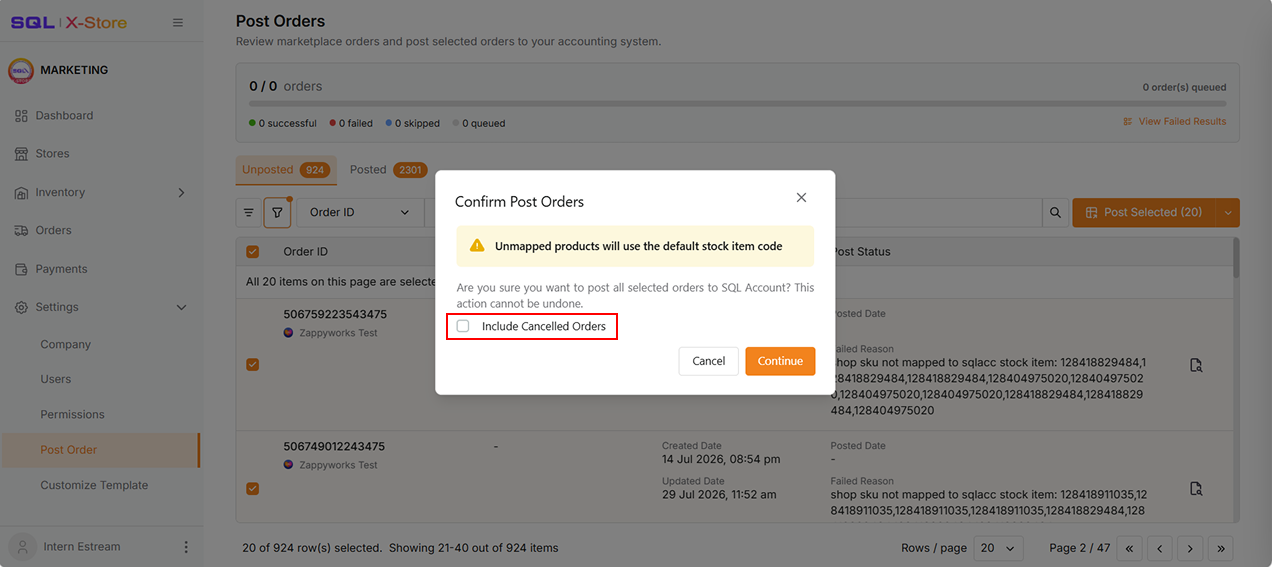
Clicking Post Selected opens a confirmation dialog. Check Include Cancelled Orders if you want cancelled orders posted along with the rest, then click Continue to proceed. Click Cancel to back out without posting.
-
A progress card shows the status of the posting process. If Include Cancelled Orders isn't selected, cancelled orders are shown as skipped. Orders still waiting to be processed are shown as queued.
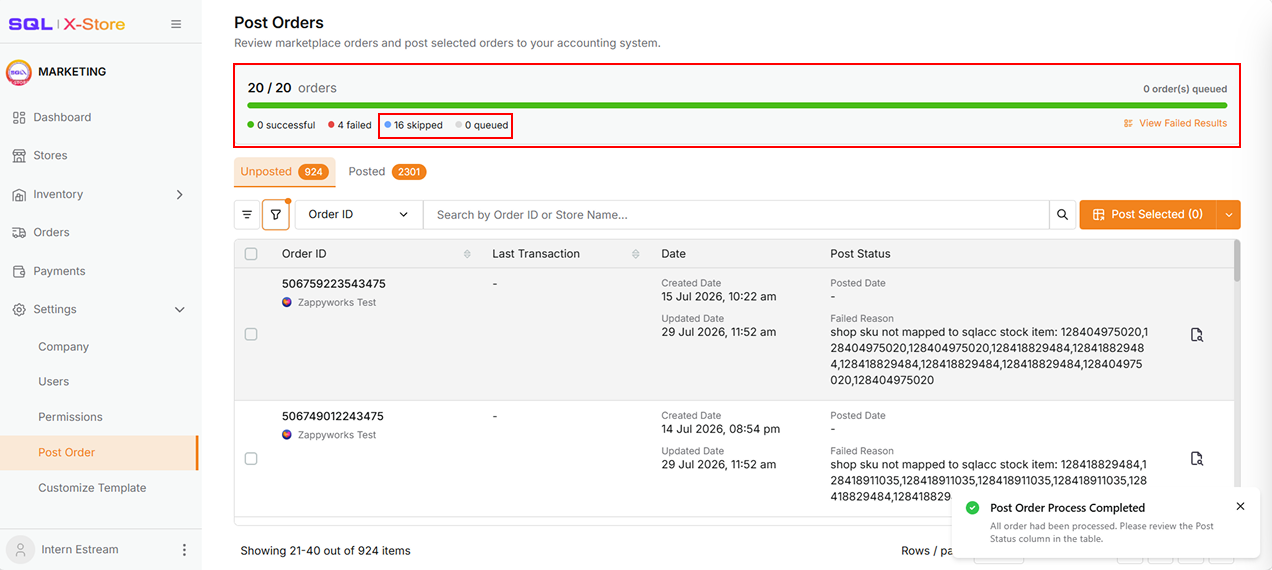
-
Once posting completes, successfully posted orders move to the Posted Tab and their Posted Date is updated. Orders that fail to post stay in the current tab, with the failure reason shown in the Post Status column.
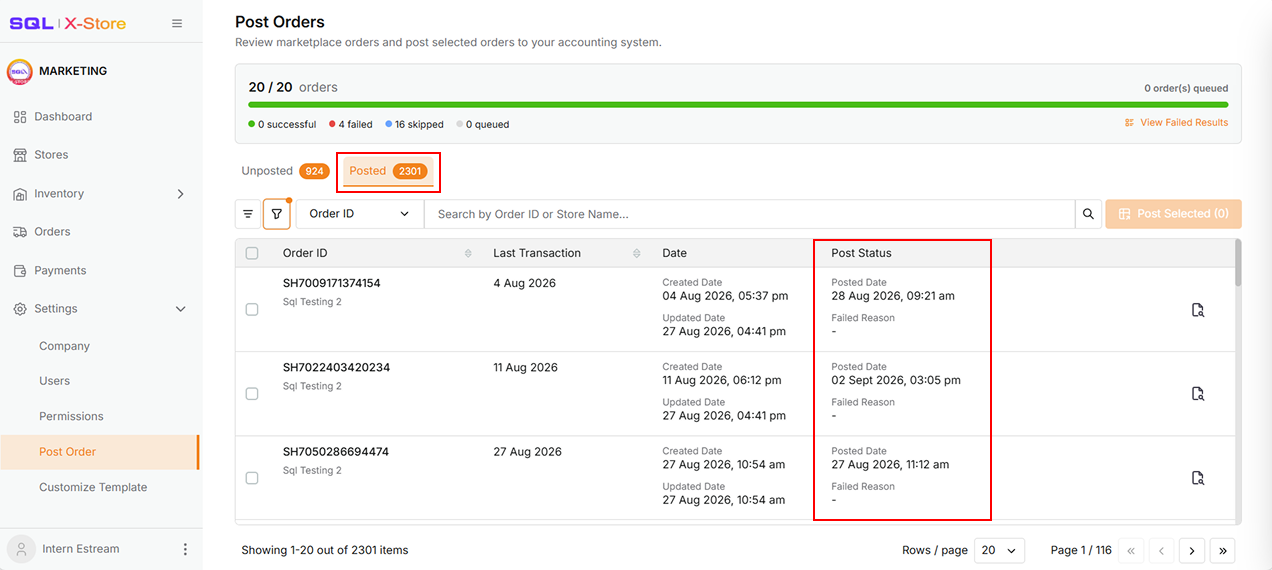
-
If an order fails to post with the reason "Shop SKU not mapped to SQL Account stock item", open the order's details page to map the SKU accordingly.
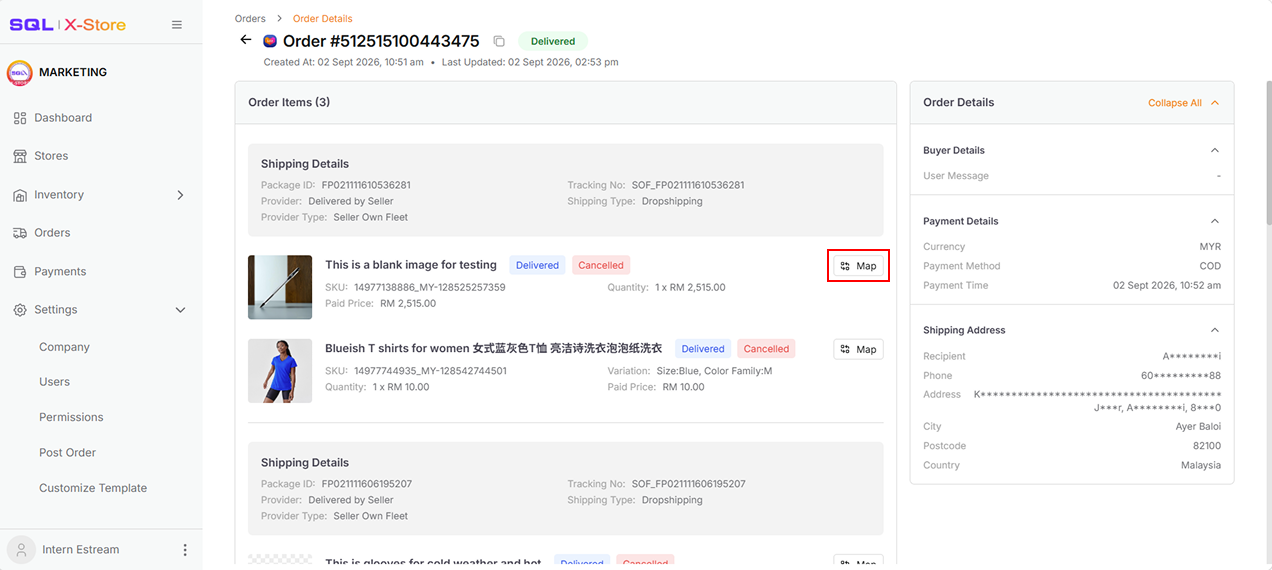
Failed Posting
If any orders fail during the post order process, you can review them in the Post Order Failed Results dialog. Only failed results from the last post order process are shown, and they are kept for only 3 hours. Once the underlying issue causing the failure has been resolved, you can repost those failed orders before they expire.
- Click View Failed Results to see orders that failed to post in the last post order process, along with their failure reasons.
- Filter orders by failure reason.
- Select the relevant orders individually, or use Select all filtered items to select every order with the matching failure reason.
- Repost selected orders.
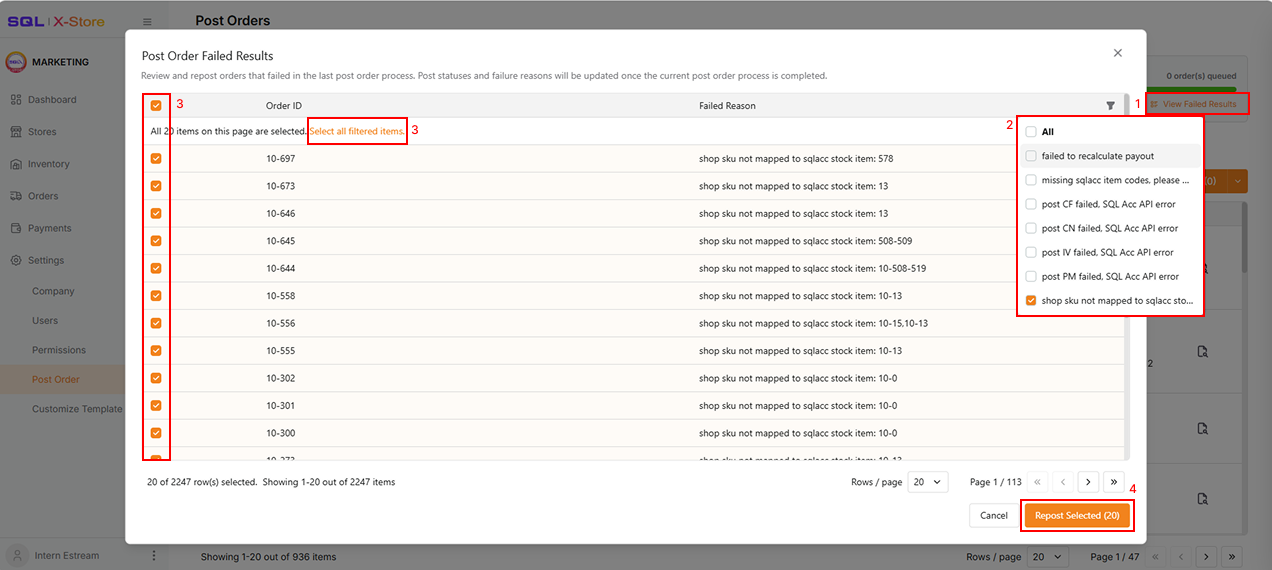
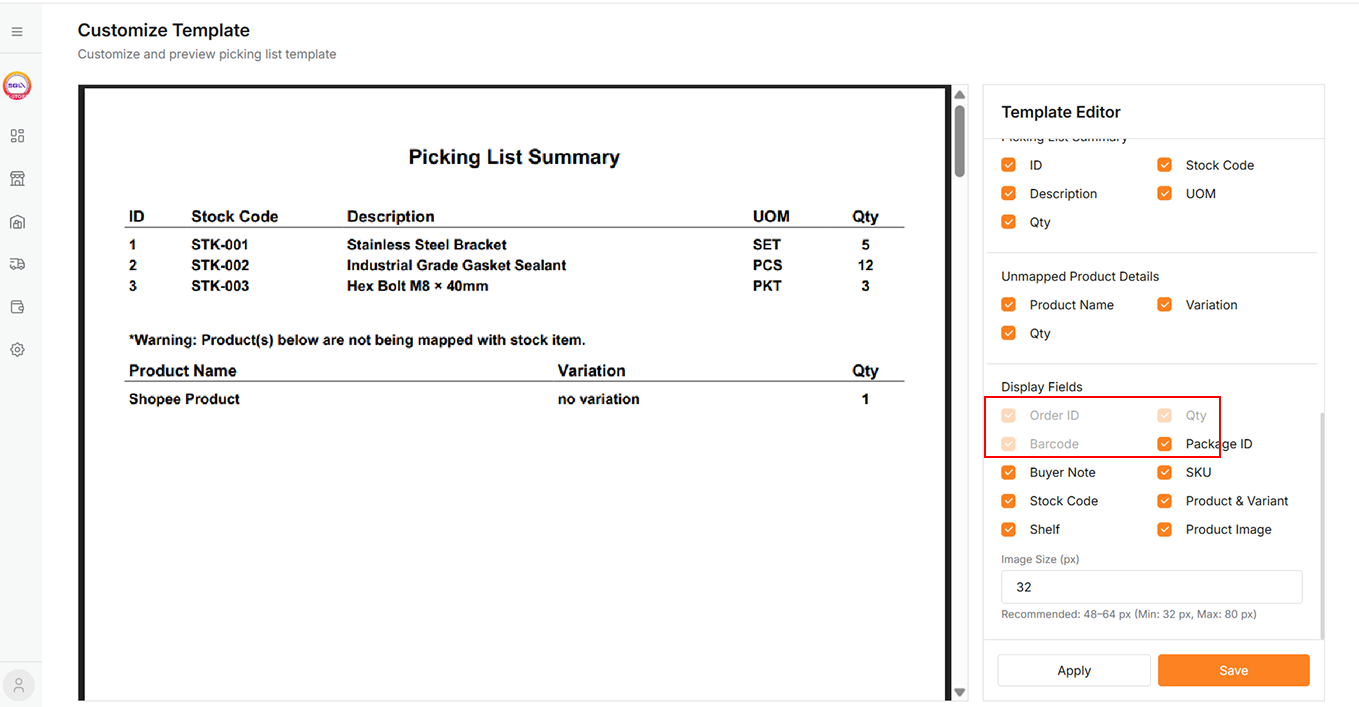
Customize Template
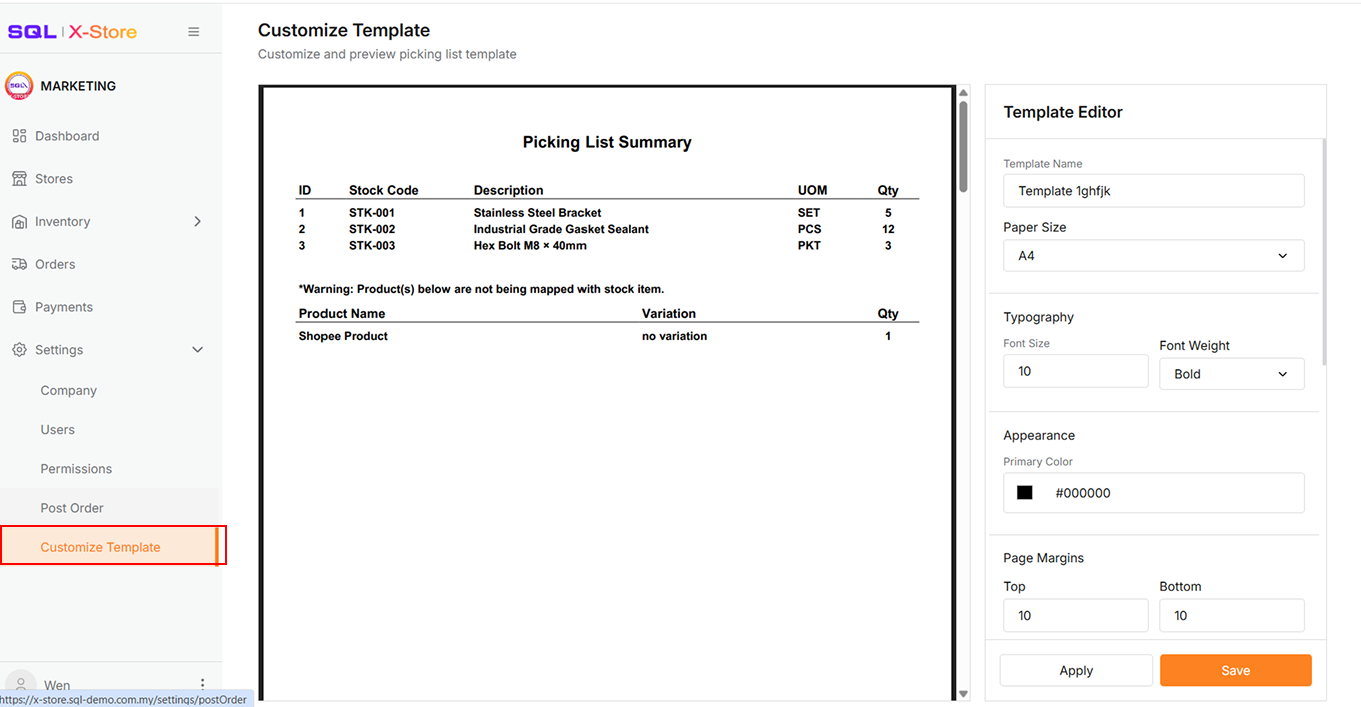
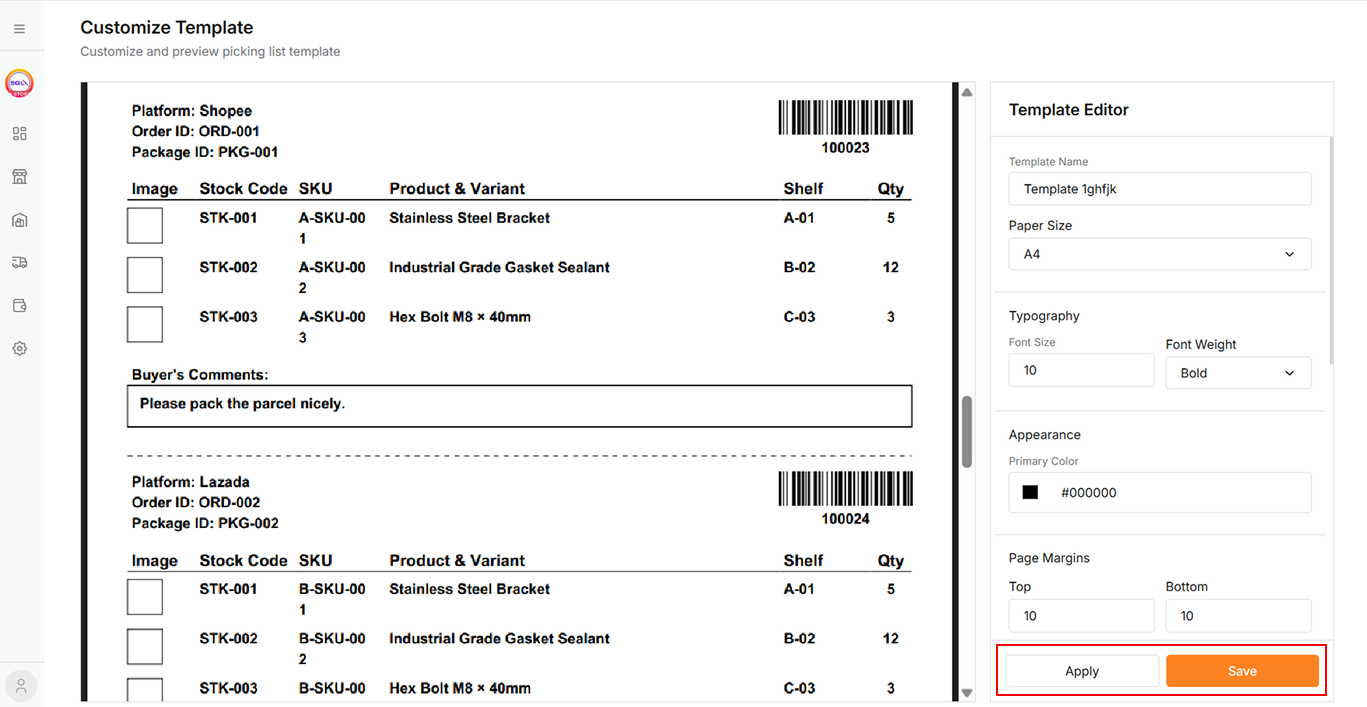
Personalize the appearance and layout of Picking List according to requirements. Users can preview the template while making changes and adjust various template settings before saving it.
-
Click Settings > Customize Template in the sidebar
-
Users can customize the template and click Apply to preview how the Picking List will look with their selected settings. Once satisfied with the changes, click Save to save the customized template settings.
-
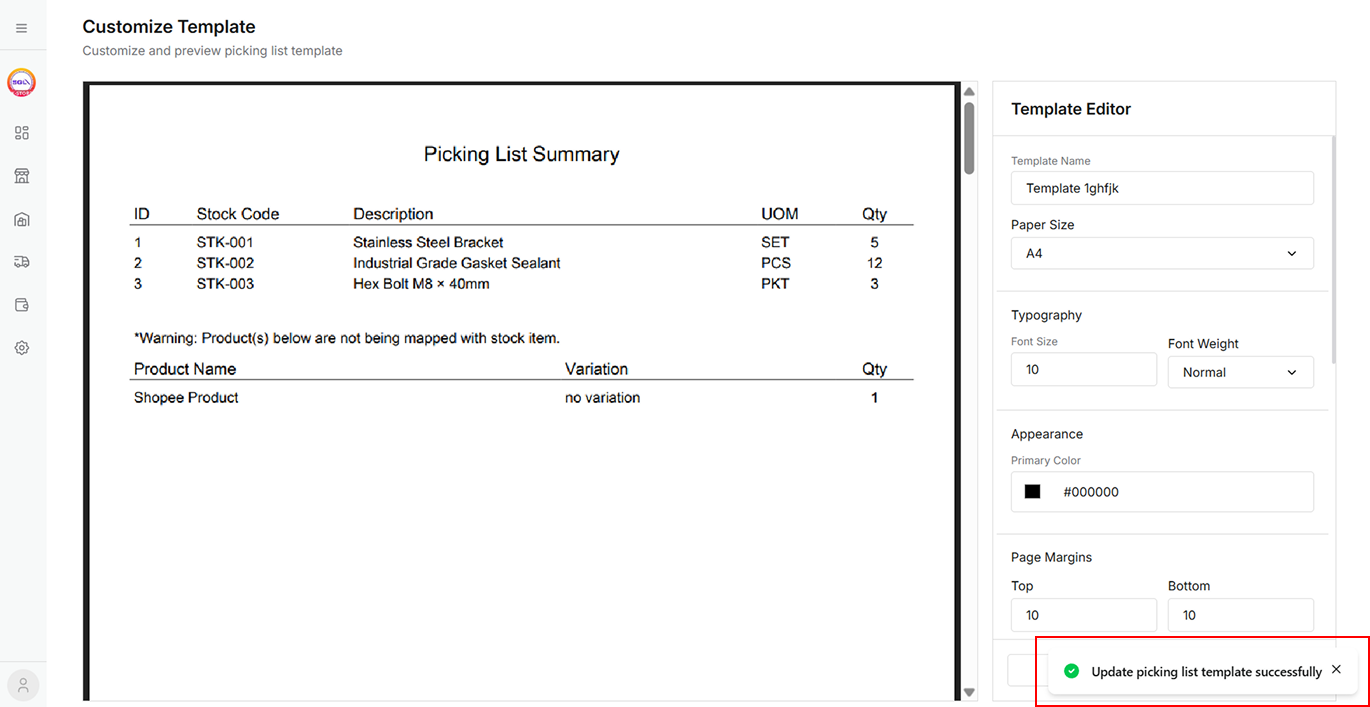
A success message will be displayed after the customized template settings are saved successfully.
-
Certain essential information is required and cannot be hidden.